Books by Katelijn Vandorpe
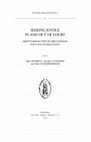
Leuven - Paris - Bristol: Peeters, ISBN: 978-90-429-4878-5, 2023
Family squabbles, fights over real estate, disputes about financial transactions and assault case... more Family squabbles, fights over real estate, disputes about financial transactions and assault cases were no less complex to resolve in Antiquity than they are in the modern world. The unique evidence from Greco-Roman and Late Antique Egypt shows a wide variety of mechanisms that could be used to settle interpersonal disputes and to maintain social order within the country. In addition to the delivery of justice by state courts or officials, attempts were made to settle disputes on a more informal level through recourse to family members, associations, divinities or religious leaders. The present volume assembles contributions by scholars studying dispute resolution or the effectiveness of law enforcement from different perspectives and different fields, with a particular focus on the transformation of the dispute process between the age of the Ptolemies and that of the Byzantine emperors.
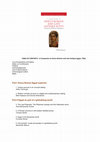
Wiley-Blackwell, ISBN 978-1-118-42847-4, see https://www.wiley.com/en-be/A+Companion+to+Greco+Roman+and+Late+Antique+Egypt-p-9781118428474, 2019
With contributions from noted authorities in the field, A Companion to Greco-Roman and Late Antiq... more With contributions from noted authorities in the field, A Companion to Greco-Roman and Late Antique Egypt offers a comprehensive resource that covers almost 1000 years of Egyptian history, starting with the liberation of Egypt from Persian rule by Alexander the Great in 332 BC and ending in AD 642, when Arab rule started in the Nile country.
The Companion takes a largely sociological perspective and includes a section on life portraits at the end of each part. The theme of identity in a multicultural environment and a chapter on the quality of life of Egypt's inhabitants clearly illustrate this objective. The authors put the emphasis on the changes that occurred in the Greco-Roman and Late Antique periods, as illustrated by such topics as: Traditional religious life challenged; Governing a country with a past: between tradition and innovation; and Creative minds in theory and praxis. This important resource:
- Discusses how Egypt became part of a globalizing world in Hellenistic, Roman and Byzantine times
- Explores notable innovations by the Ptolemies and Romans
- Puts the focus on the longue durée developments
- Offers a thematic and multidisciplinary approach to the subject, bringing together scholars of different disciplines
- Contains life portraits in which various aspects and themes of people’s daily life in Egypt are discussed
Written for academics and students of the Greco-Roman and Late Antique Egypt period, this Companion offers a guide that is useful for students in the areas of Hellenistic, Roman, Byzantine and New Testament studies.
Cambridge University Press, see https://www.cambridge.org/core/books/land-and-taxes-in-ptolemaic-egypt/FC37CD9BE8AF9181145D4295D8C1DF7D#fndtn-information, 2017
This book provides the first edition with an extensive introduction and full commentary of a uniq... more This book provides the first edition with an extensive introduction and full commentary of a unique land survey written on papyrus in Greek which derives from that area of southern (Upper) Egypt known as the Apollonopolite (or Edfu) nome and is now preserved in Copenhagen. Dating from the late second century BC, this survey provides a new picture of both landholding and taxation in the area which differs significantly from that currently accepted. The introduction sets this new evidence in its contemporary context, drawing particular attention to what it reveals about the nature of the relations of the Ptolemaic royal administration with local grandees, Egyptian temples and the army.
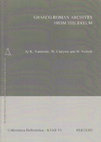
Leuven-Paris-Bristol: Peeters, 2015, 496p, see http://www.peeters-leuven.be/boekoverz.asp?nr=9635
The Fayum is a large depression in the western desert of Egypt, receiving its water directly from... more The Fayum is a large depression in the western desert of Egypt, receiving its water directly from the Nile. In the early Ptolemaic period the agricultural area expanded a great deal, new villages were founded and many Greeks settled here. When villages on the outskirts were abandoned about AD 300-400, houses and cemeteries remained intact for centuries. Here were found thousands of papyri, ostraca (potsherds) and hundreds of mummy portraits, which have made the area famous among classicists and art historians alike. Most papyri and ostraca are now scattered over collections all over the world. The sixth volume of Collectanea Hellenistica presents 145 reconstructed archives originating from this region, including private, professional, official and temple archives both in Greek and in native Demotic.
With contributions by Giuseppina Azzarello, Yanne Broux, Marie-Pierre Chaufray, W. Graham Claytor, Lucia Criscuolo, Birgit Feucht, Karolien Geens, Francisca A.J. Hoogendijk, Ruben Smolders, Silke Vanbeselaere, Bart Van Beek, Korneel Van Lommel, Sofie Waebens
Brussels 2010, 327p, see http://www.peeters-leuven.be/search_serie_book.asp?nr=295
The small town of Pathyris, modern Gebelein, is located south of Thebes. After a huge revolt supp... more The small town of Pathyris, modern Gebelein, is located south of Thebes. After a huge revolt suppressed in 186 B.C., a Ptolemaic military camp was built in this town, where local people could serve as soldiers-serving-for-pay. The Government took several initiatives to Hellenize the town, resulting in a bilingual society. The town produced hundreds of papyri and ostraka, discovered during legal excavations and illegal diggings at the end of the 19th century and in the 20th century. Katelijn Vandorpe and Sofie Waebens describe the history of the town and reconstruct the bilingual archives by using, among other things, prosopographical data and the method of museum archaeology.
Brussels 2002, 462p. and 24 plates, see http://www.peeters-leuven.be/boekoverz.asp?nr=9566
This volume contains an introduction and edition of the bilingual family archive of Dryton, his w... more This volume contains an introduction and edition of the bilingual family archive of Dryton, his wife Apollonia alias Senmonthis and their offspring. The Cretan officer Dryton, son of Pamphilos, served in the Ptolemaic army of the second century B.C. A son was born out of his first marriage. When he was about 40 years old, Dryton entered a second marriage with an Egyptian girl Apollonia alias Senmonthis, a daughter of a fellow soldier. Dryton went to live in the small town of Pathyris, south of Thebes. The couple had five daughters. The family’s archive contains a diversity of Greek and Demotic texts written on papyrus and ostraka, reflecting Greek and Egyptian traditions. The archive is important for research on multicultural societies.
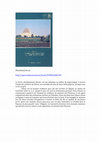
Leuven: ULP, 1995, 112p., 1995
Le livret, abondamment illustré, est une initiation au métier du papyrologue, à travers l'étude d... more Le livret, abondamment illustré, est une initiation au métier du papyrologue, à travers l'étude des archives de Zénon, un ensemble de près de deux mille papyrus, presque tous écrits en grec.
Zénon est un homme d'affaires grec qui fait carrière en Égypte au milieu du troisième siècle av. J.-C., quand le pays est sous la domination grecque. Nous faisons sa connaissance quand il est l'homme de confiance du ministre des Finances et son agent commercial dans des entreprises privées en Palestine. Deux ans plus tard, Zénon rentre en Égypte à cause de la guerre qui vient d'éclater avec la Syrie. Il accompagne le ministre lors de deux tournées d'inspection à travers le Delta du Nil en qualité de secrétaire privé. Après une maladie, Zénon opte pour une vie plus sédentaire et s'établit dans le Fayoum, la plus grande 'oasis' d'Égypte, où il prend la direction d'un domaine immense qui doit être mis en culture et qui appartient au ministre des Finances.
Articles by Katelijn Vandorpe
K. Lembke, M. Minas-Nerpel & S. Pfeiffer (eds.), Tradition and Transformation: Egypt under Roman Rule (CHANE Series 41), Leiden: Brill, 415-435
in: H. Melaerts & L. Mooren (edd.), Le rôle et le statut de la femme en Egypte hellénistique, romaine et byzantine (Studia Hellenistica 37), Leuven: Peeters 2002 , p. 325-336.
in D. Dana and C.A. La’da (eds.), Armée lagide et interactions culturelles. Nouvelles sources, nouvelles approches (Philippika 185), Wiesbaden: Harrassowitz, p. 193-220, 2026
The army is considered a privileged group in Ptolemaic Egypt. Cavalrymen were able to make use of... more The army is considered a privileged group in Ptolemaic Egypt. Cavalrymen were able to make use of service horses at low cost and cleruchs were granted a klēros to support their family and, where applicable, their horse. Soldiers were prominently featured in priestly and royal decrees, such as the Alexandria Decree of 243 BC, which refers to Ptolemy III’s promise to waive some or all of the tax arrears so that “the army and all other people will prosper during his reign”. But can we consider the military a privileged section of the population in terms of taxation? The fact that soldiers were listed separately in the tax lists might give the impression that they enjoyed some privileges. But our research does not support such a hypothesis.
in Études rurales 216, Special issue: La micro-géographie rurale de l'Égypte, p. 70-95, 2025
This paper examines Pathyris’ rich papyrological source material, highlighting its usefulness in ... more This paper examines Pathyris’ rich papyrological source material, highlighting its usefulness in reconstructing the town’s rural and urban landscape. It shows how its inhabitants attempted to describe and locate their land and houses in their contracts, orienting their real estate from the perspective of the flow of the Nile and the position of the temple avenue. It also discusses how these written sources, supported by insights from ethnographic studies in Nubia, help to distinguish between the qȝy and mȝy land types, the formation of mȝy of land, its exploitation and to identify those who sought ownership of it.
in BIFAO 124 (2024), pp. 165-192. See also BIFAO en ligne: https://www.ifao.egnet.net/bifao/124/7/, 2024
This paper examines an underexposed theme of the papyrus archive of the Theban royal bank, contex... more This paper examines an underexposed theme of the papyrus archive of the Theban royal bank, contextualizing data on Amun’s Userhat boat and the Theban religious festivals in the later Ptolemaic period. The bank archive reveals the fraudulent use of money deposits destined for the replacement of two iron anchors of the Userhat and for the maintenance of this sacred, riverine ship which transported Amun’s sacred bark twice a year (during the Opet and the Valley Festival). The Userhat is well attested in the Pharaonic period, while the information for the Ptolemaic era, though scarce, shows that the main Theban festivals were still organized and that the Userhat still played a major role. The documentary evidence offers more detail on royal investment in the ship’s maintenance even during a civil war, its outer appearance, on the saline basin where it was moored and the storage place of its removable parts. The association of the Ptolemaic Userhat with the Opet temple, as suggested by the bank records, fits with a shift in focus towards this sanctuary in the later Ptolemaic period.
in C. Humfress, D. Ibbetson and P. Olivelle (eds.), The Cambridge Comparative History of Ancient Law, Cambridge 2024, pp. 146-180. ISBN 9781107035164 (hardback) | ISBN 9781009452250 (paperback) | ISBN 9781009452243 (ebook), 2024
This chapter discusses a wide range of friendly and hostile interstate relations in the ancient N... more This chapter discusses a wide range of friendly and hostile interstate relations in the ancient Near East, ancient India and China, Archaic and Classical Greece, the Hellenistic states, Republican and Imperial Rome. ‘State’ is a concept under debate, as it may encompass not only empires built by conquest, but also by ‘invitation’ (such as the position of Classical Athens in the Delian League) or by a combination of both systems (for example, the early Ptolemaic empire). Furthermore, when reading this chapter one should keep in mind that ‘state’ or ‘polity’ is a dynamic concept in the sense that many ‘states’ have been formed as a result of hostile or even friendly relations before entering into new types of relationships.
in S. Waebens, K. Vandorpe and N. Vaneerdewegh (eds.), Seeking Justice in and out of Court: Dispute Resolution in Greco-Roman and Late Antique Egypt (Studia Hellenistica 62). Leuven - Paris - Bristol: Peeters, 2023, ISBN: 978-90-429-4878-5, pp. 67-88, 2023
The Ptolemies were confronted with a broad range of challenges inherent in a new multicultural so... more The Ptolemies were confronted with a broad range of challenges inherent in a new multicultural society, including in the domain of jurisdiction. This paper assesses the judiciary in the second-century BC Thebaid, starting from three case studies where the judicial procedures can be followed over a longer period and using the USIP’s guidelines which offer an interesting framework for the assessment of antique justice systems. The paper discusses the integration of local traditions of justice, the provision of legal aid & professionalization of justice personnel, language, geographical & financial barriers, and the enforcement of court verdicts. Although the overall assessment is a positive one, a weak link in the judiciary system was undoubtedly the enforcement of verdicts.
in P. Sänger and S. Scheuble-Reiter (eds.), Söldner in der griechischen Welt (Historia. Einzelschriften 269), Stuttgart: Franz Steiner Verlag, ISBN: 978-3-515-13312-8, pp. 197-207, 2022

in Archiv für Papyrusforschung und verwandte Gebiete 54 (2008), pp. 87-108, 2008
Priests of the local Egyptian elite had access to higher posts in the administration or army and ... more Priests of the local Egyptian elite had access to higher posts in the administration or army and that Egyptian scribes, retrained as Greek notaries or village scribes, were enrolled into the social class of the Persians at Pathyris. These are, though, exceptional examples of social mobility, involving only a few inhabitants of the village who happen to belong to the local Egyptian elite.
After the Upper-Egyptian revolts, the king set up new camps in the South. Pathyris received a camp shortly before 161 BC. Local Egyptians who in the past were herdsmen and at times fulfilled military service as ‘man of Syene’ or similar, thus continuing an Upper-Egyptian tradition, were inscribed in the camps as soldier serving-for-pay and were enrolled into the social class of Persians, an intermediary class of second-degree Greeks, probably having some legal and fiscal privileges. Such enrolment lead to a certain degree of Hellenization and was hereditary: their sons and daughters became Persians.
In some periods, especially after 116 BC, several Persian soldiers serving for pay were unemployed and thus not paid by the government. Such Persians were labeled ‘Persians of the epigone’ in Greek texts, ‘Greeks born in Egypt (among the children of the soldiers)’ in Demotic documents. The Persians of the epigone constituted a form of reserve troop from which soldiers serving for pay could be recruited for particular campaigns, for instance, during the Judean-Syrian-Egyptian conflict in 103-101 BC. When recruited, the Persians of the reserve (epigone) temporarily became Persian soldiers serving for pay, but could afterwards revert to the status of Persian of the reserve (epigone). Some Persians of the epigone probably remained non-active soldiers for their entire lives. Several made a living as herdsmen.
The enrolment of these locals into the social class of Persians involves social mobility on a much larger scale than was previously understood: not only the Egyptian elite could enjoy upward mobility. There are hardly any common Egyptians at Pathyris: the inhabitants are either priests or Persians. The Ptolemaic king thus aimed at mobilizing the Egyptian people for his cause, undoubtedly in order to avoid new native rebellions in the South.
K. Vandorpe, 'Paramone in Ptolemaic Egypt', in S. Maillot and J. Zurbach (eds.), Statuts personnels et main-d'œvre en Méditerranée hellénistique, Clermont-Ferrand: Presses de l'Université Blaise Pascal, ISBN: 978-2-84516-976-0, pp. 193 – 209, 2021
This paper discusses paramone-texts from Ptolemaic Egypt, which are of a different nature than th... more This paper discusses paramone-texts from Ptolemaic Egypt, which are of a different nature than the Delphic manumissions with paramone. In the early Ptolemaic period paramone or mone denotes a legal obligation to appear in court or to be present at work (in a governmental context), guaranteed by sureties and/or oaths (“obligatory appearance” in court/ “obligatory presence” at work). In later Ptolemaic times, the technical term paramone is reserved for service contracts negotiated to settle a debt in a private context, requiring that the debtor or his representative stays with the creditor in the latter's house to render service (“obligatory continued presence” for service). While the clauses in the Ptolemaic paramone-texts are panhellenic, the idea of settling a debt by service may be inspired by Greek (Central Greece) and Egyptian traditions.
in Ancient Society 50 (2020), pp. 41-64, 2020
Pigeon breeding, already popular in Pharaonic Egypt and in the Greek world, was continued into th... more Pigeon breeding, already popular in Pharaonic Egypt and in the Greek world, was continued into the Ptolemaic period. Pigeon squabs were considered a delicacy, and pigeon manure was used to fertilize types of land that could not be enriched by the Nile inundations. Pigeon houses of a modest size were constructed in the residential area's, while larger buildings were found on the outskirts of towns and in the agricultural area. Two types of taxes were levied on these pigeon houses: 1. a revenue tax known as the one-third tax and based on the number of productive nests; 2. a property tax called the cubit-tax and based on the ground surface of the dovecotes. After an introduction to the many uses of pigeons and a detailed discussion of both taxes, this paper tries to find out why two distinct taxes were established and which were the target groups of these levies.
N. Dogaer and K. Vandorpe, in J. Stolk and G. van Loon (eds.), Text Editions of (Abnormal) Hieratic, Demotic, Greek, Latin and Coptic Papyri and Ostraca (Pap.Lugd.Bat. 37), Leiden: Brill, ISBN 978-90-04-43864-4, pp. 76-83. , 2020
in: A. Jördens and U. Yiftach (eds.), Accounts and Bookkeeping in the Ancient World. (Legal Documents in Ancient Societies VIII ) (Philippika 55, 2), Harrassowitz 2020, pp. 122-140, ISBN 978-3-447-11198-0..
Egypt may have been a gift of the Nile as suggested by Herodotus (2.5), but a complex administrat... more Egypt may have been a gift of the Nile as suggested by Herodotus (2.5), but a complex administration was needed to deal with the agricultural realities of the yearly Nile inundations. This paper discusses the compilation of land surveys by the Ptolemaic administration. The Ptolemies continued the, undoubtedly costly, twofold Pharaonic survey operation: after the flood, land and its holders were listed, while after sowing but before the harvest, a crop report was drawn up, which formed the basis for estimating tax revenues. Both operations resulted in many forms of listings: by landholder, land category and crops, and these surveys were compiled at village, toparchy and nome level, and beyond.



Uploads
Books by Katelijn Vandorpe
The Companion takes a largely sociological perspective and includes a section on life portraits at the end of each part. The theme of identity in a multicultural environment and a chapter on the quality of life of Egypt's inhabitants clearly illustrate this objective. The authors put the emphasis on the changes that occurred in the Greco-Roman and Late Antique periods, as illustrated by such topics as: Traditional religious life challenged; Governing a country with a past: between tradition and innovation; and Creative minds in theory and praxis. This important resource:
- Discusses how Egypt became part of a globalizing world in Hellenistic, Roman and Byzantine times
- Explores notable innovations by the Ptolemies and Romans
- Puts the focus on the longue durée developments
- Offers a thematic and multidisciplinary approach to the subject, bringing together scholars of different disciplines
- Contains life portraits in which various aspects and themes of people’s daily life in Egypt are discussed
Written for academics and students of the Greco-Roman and Late Antique Egypt period, this Companion offers a guide that is useful for students in the areas of Hellenistic, Roman, Byzantine and New Testament studies.
With contributions by Giuseppina Azzarello, Yanne Broux, Marie-Pierre Chaufray, W. Graham Claytor, Lucia Criscuolo, Birgit Feucht, Karolien Geens, Francisca A.J. Hoogendijk, Ruben Smolders, Silke Vanbeselaere, Bart Van Beek, Korneel Van Lommel, Sofie Waebens
Zénon est un homme d'affaires grec qui fait carrière en Égypte au milieu du troisième siècle av. J.-C., quand le pays est sous la domination grecque. Nous faisons sa connaissance quand il est l'homme de confiance du ministre des Finances et son agent commercial dans des entreprises privées en Palestine. Deux ans plus tard, Zénon rentre en Égypte à cause de la guerre qui vient d'éclater avec la Syrie. Il accompagne le ministre lors de deux tournées d'inspection à travers le Delta du Nil en qualité de secrétaire privé. Après une maladie, Zénon opte pour une vie plus sédentaire et s'établit dans le Fayoum, la plus grande 'oasis' d'Égypte, où il prend la direction d'un domaine immense qui doit être mis en culture et qui appartient au ministre des Finances.
Articles by Katelijn Vandorpe
After the Upper-Egyptian revolts, the king set up new camps in the South. Pathyris received a camp shortly before 161 BC. Local Egyptians who in the past were herdsmen and at times fulfilled military service as ‘man of Syene’ or similar, thus continuing an Upper-Egyptian tradition, were inscribed in the camps as soldier serving-for-pay and were enrolled into the social class of Persians, an intermediary class of second-degree Greeks, probably having some legal and fiscal privileges. Such enrolment lead to a certain degree of Hellenization and was hereditary: their sons and daughters became Persians.
In some periods, especially after 116 BC, several Persian soldiers serving for pay were unemployed and thus not paid by the government. Such Persians were labeled ‘Persians of the epigone’ in Greek texts, ‘Greeks born in Egypt (among the children of the soldiers)’ in Demotic documents. The Persians of the epigone constituted a form of reserve troop from which soldiers serving for pay could be recruited for particular campaigns, for instance, during the Judean-Syrian-Egyptian conflict in 103-101 BC. When recruited, the Persians of the reserve (epigone) temporarily became Persian soldiers serving for pay, but could afterwards revert to the status of Persian of the reserve (epigone). Some Persians of the epigone probably remained non-active soldiers for their entire lives. Several made a living as herdsmen.
The enrolment of these locals into the social class of Persians involves social mobility on a much larger scale than was previously understood: not only the Egyptian elite could enjoy upward mobility. There are hardly any common Egyptians at Pathyris: the inhabitants are either priests or Persians. The Ptolemaic king thus aimed at mobilizing the Egyptian people for his cause, undoubtedly in order to avoid new native rebellions in the South.